Thread Lift Korea: What the Thread Types Mean and How Threads Differ from Filler and Ultrasound
If you are researching a thread lift in Korea, clinic pages quickly fill up with unfamiliar labels: mono, cog, Jamber, HIKO, PCL, PDO, HIFU. These words describe products and approaches. None of them guarantees a result. This guide uses one clinic's published thread list, and its own comparison with filler and focused ultrasound, as a worked example. The goal is to help you read similar pages more critically and go into a consultation with sharper questions.
What a thread lift is, in the clinic's own terms
THE Beautiful Clinic describes a thread lift as placing special threads in the layer just under the skin. The threads go in through small entry points rather than an incision, and the aim is to reposition sagging tissue. This is how the provider explains the procedure. It is not an independent finding about how well a thread lift works, or whether it suits a particular face.
The clinic is just as clear about what the procedure is not. It says a thread lift is not a surgical facelift and does not remove skin. That line matters when you compare marketing language. "Lifting" on a menu can mean anything from threads to surgery, so check which category a provider means before you read its prices or downtime.
Reading a thread list: mono, cog, Jamber and HIKO
The clinic lists five thread types. Ultra V mono, Ultra V cog and Jamber are listed for the face. HIKO PCL and HIKO PDO are listed for the nose only. Read these as product and brand labels from one provider's menu. The list alone doesn't tell you material specifications, how long a given thread stays in tissue, or how one type compares with another. Any description of what each thread does is the clinic's own account, not a confirmed specification.
The order in which the clinic makes decisions is also useful to know. It says it plans from the direction in which the face has descended. It picks the thread type and the direction of lift first, and decides how many threads to use only after that. That gives you a practical check: by this clinic's own logic, a quote that leads with a thread count but says nothing about type or direction is missing part of the picture. The clinic's full table, with its notes on each type, sits in its thread lift korea explainer alongside the rest of its procedure description.
Threads, filler and focused ultrasound are described as different jobs
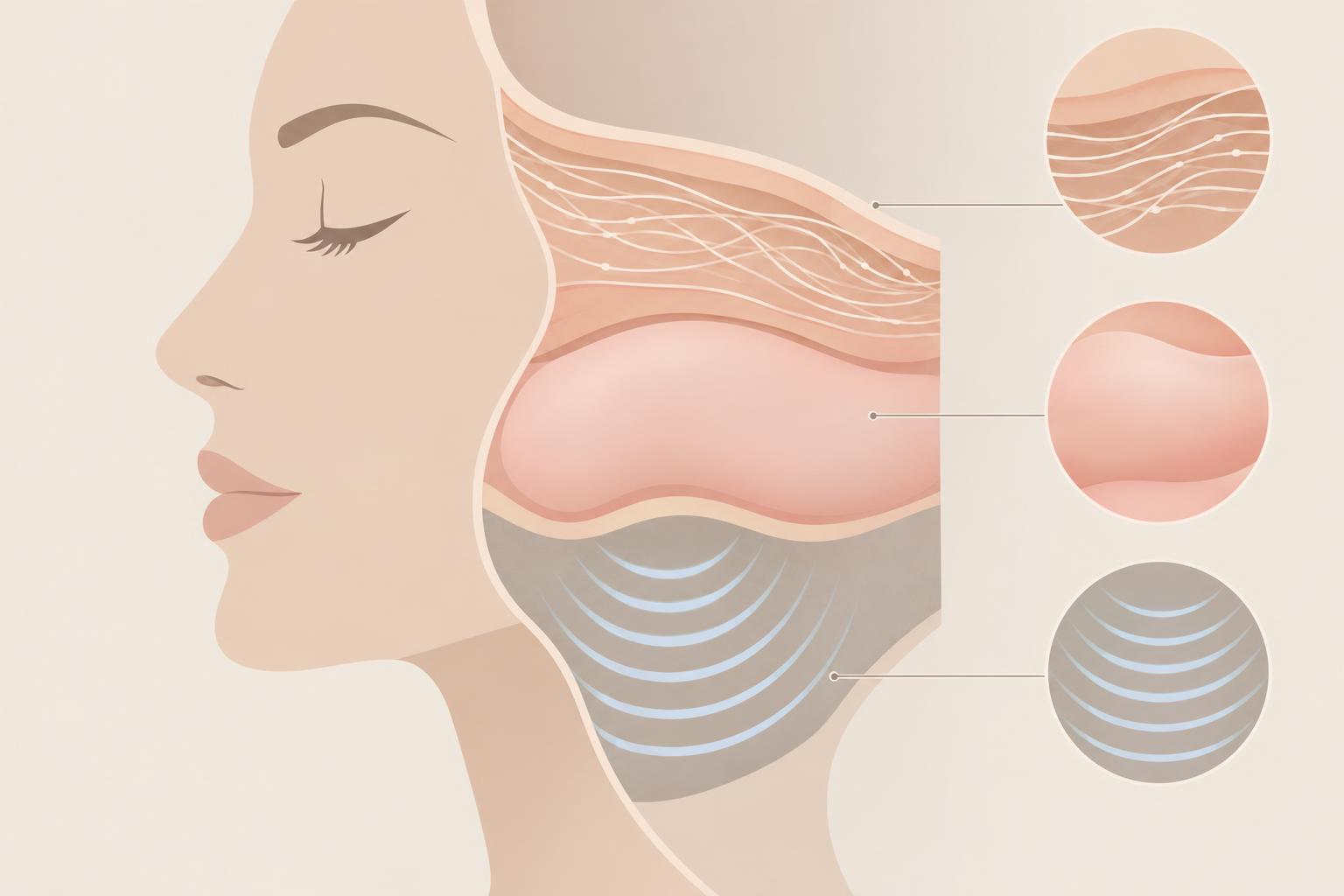
The most practical distinction on the page is a three-way comparison. In the clinic's words, threads move tissue, filler replaces volume, and HIFU (focused ultrasound) tightens from deeper down. The clinic presents them as different jobs, not competing versions of the same thing. Keep that in mind when reading treatment menus. A device and a thread treatment may sit side by side, but in the provider's own description they address different problems.
The clinic also explains how a thread session runs. It is done under local anaesthetic, and chair time depends on the plan, so the clinic confirms it with the quote. For trip planning, the clinic estimates two to five days of swelling and suggests booking early in your stay. That is one provider's planning figure, not a promise about your own recovery.
On side effects, the clinic names bruising and dimpling as common. Citing a 2025 review on its own page, it lists infection and thread migration among less frequent complications. These are the clinic's summaries of research it chose to cite. You will have a firmer basis if you read the cited work yourself, or ask the treating doctor how such problems are recognised and managed.
Turning the terms into questions for a quote
Once the vocabulary is clear, you can turn it into questions. Which thread type is proposed, and why that one? Which area, and in which direction? How many threads, and is the price per session, per thread or per area? What is included, and what is not? Who will do the procedure, and how is follow-up handled if something seems wrong after you fly home?
Published prices can give those questions a reference point, but they won't answer them. THE Beautiful Clinic's price list dated 20 August 2026 shows 1,990,000 KRW per session for its signature midface or V-line lifting, and 499,000 KRW for Jamber volume with four threads. Both prices are before 10% VAT, and the clinic says the final figure is confirmed at consultation. These are one clinic's dated menu prices, not a Korea-wide benchmark or a personal quote. For a preliminary discussion, the same clinic asks you to send front and side photos with your travel dates, so it helps to have those ready.
If your thread lift korea research involves several clinics, you may prefer to gather those answers through a coordinator. KCODI describes itself as a booking and medical-interpretation coordinator, not a clinic. It says it sends written quotes and assigns a medical interpreter. Its stated policy is to itemise fees, aftercare visits and exclusions before any deposit is paid. It also notes that what clinics offer differs, so ask directly whether a specific clinic performs thread lifts and which terms apply there.
A short glossary checklist before you decide
A few distinctions are worth keeping at hand. Thread type is not the same as thread count: in the clinic's planning, type and direction come first and the count follows. Lifting, adding volume and deeper-layer energy are different things: threads, filler and HIFU are described as doing separate jobs, so ask which problem a proposed treatment is meant to address. A planning estimate is not your recovery: a two-to-five-day swelling figure comes from one provider, not from an assessment of you.
None of these terms settles whether a thread lift is right for you. That is a question worth putting directly to the clinician who would perform the procedure, and asking them to assess it for you in an individual consultation. What the vocabulary gives you is the ability to tell a product label from a promise, and a planning estimate from a guarantee. Those two skills make every quote you collect easier to compare.